Dear Reader,
After all those boring (not to me, of course!) pots I posted about a fortnight ago, I thought you might like something a bit sexier. So here goes...
Yesterday, I went to see the movie Hercules (the trailer in this link has all the best bits of the film, but Wikipedia is more informative). It was research, you understand, background for my writing. As I drove us home, my companion said a strange thing: 'Not a single inguinal crease on show, even though it’s about Herakles.'
'How true,' said I, nodding sagely. As soon as I got home, I looked up inguinal crease on the internet. And sure enough, Herakles (Hercules in Latin) is often depicted as naked or nearly naked, showing a pronounced inguinal crease (if you don't know what it is yet, Jess Cartner-Morley explains below).
 |
| Herakles (Hercules in Latin) and Athena (Minerva) in the museum at Ancient Olympia |
You may have noticed it without
noticing, so to speak, especially if you've been watching the Commonwealth Games in Glasgow, where the beauty of perfectly toned athletic bodies is constantly on show. And if you study anything to do with Ancient Greece or Rome, you will see them everywhere anyway. It seems it's the must-have-for-men in the beauty stakes this year.
I find I have in fact been featuring the inguinal crease on this blog (without realising its vital importance and the homage that is its due), in such pictures as …
 |
| ... this charming but arrogant young man (No, it's not the bow!) |
 |
| ... and these older men training for spear throwing J. Paul Getty Museum, Malibu, California |
 |
| ... and even the Zeus (or Poseidon) in the National Archaeological Museum of Athens. |
This is how Jess Cartner-Morley introduces it in the
Guardian (on 5th July) as part of her ‘Guide to contemporary
exposure protocol’:
David Gandy (from the Guardian)

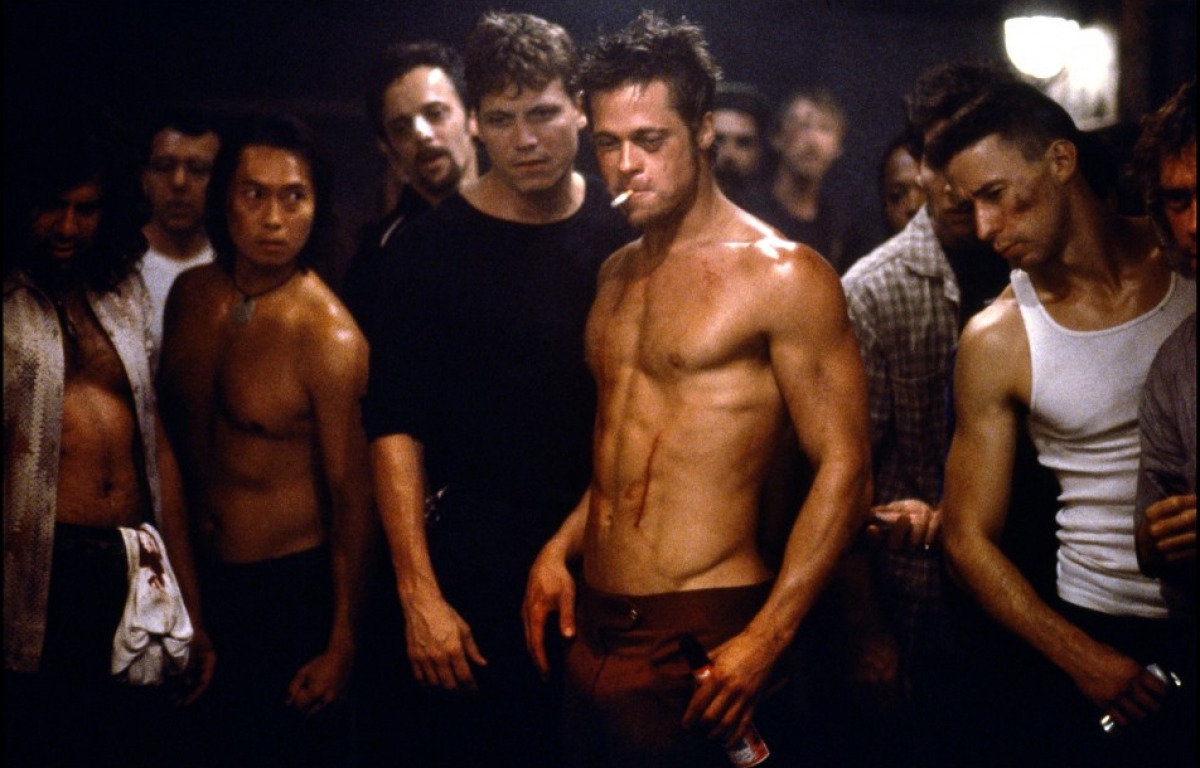
"One for the boys. Popeye biceps and Chippendale pecs are so very over. The trophy body part for the 2014 male is the inguinal crease: the v-shaped dip between the waist and groin. This is nothing new – Michelangelo's David had it going on – but after a slow buildup (think D'Angelo, and Brad Pitt in Fight Club, and David Gandy modelling Dolce & Gabbana), this year they are everywhere. (See: David Beckham's underwear adverts.) What's interesting is that this is not a muscle, but a ligament – in other words, to expose it requires not building muscle, but losing fat. Men's Health magazine reports that for an optimal inguinal crease, you need to get down to between 5% and 8% body fat. The inguinal crease craze is, in other words, the size zero scandal reinvented for men."
I remember, a long time ago, noticing a line on a ‘Kouros’ style statue in the
Athens National Archaeological Museum.
I was looking at the sculpture from the side, and was first amazed at the
depth of the thighs (deeper than the chest – part of its stylisation, perhaps?) And then I noticed that there was a line that almost looked as though
the legs had been made separately and added to the torso. Little did I know then that it would be turn out to be the definitive symbol of sexy masculinity in 2014.
 |
| Cycladic, c2000 BC, 25 cms, from L'Art des Cyclades by Christian Zervos |
 |
| Marble, c490 BC, life size, British Museum |
 |
| Marble Attic kouros, c600 BC, 300 cms |
But of course it's actually nothing new, and has been represented in art from at least Cycladic times (more than 3000 years
ago) to the present, becoming ever more life-like with the passing of time and the introduction of new technologies.
 |
| copy of a Doryphorus (spear carrier) (hundreds made) from c200 BC, Ancient Messene museum |
 |
| Leonardo da Vinci's Proportions of the Human Figure, after Vitruvius Venice Academy |
 |
| The Youth of Antikythira in the National Archaeological Museum of Athens. Photo by Ricardo André Frantz |
Last but not least in this gallery of gorgeousness, I'd like to draw attention to the much-renovated statue whose head we used for
the cover of The Boy with Two Heads. He has an inguinal crease to die for.
As you probably know by now, he is called the Youth of Antikythira. I have always felt that his face is too young for his body, which is why we used it for my Boy who is twelve, but I have recommended that my movie-going companion has a look at the rest of him, seeing that Hercules in the movie was such a disappointment. Mind you, to my eyes, Dwayne Johnson, who plays Hercules, has even more impressive muscles than the drawings in the comic books that the film is based on.
But of course that, dear Reader, is not why I went to see it ...
But of course that, dear Reader, is not why I went to see it ...